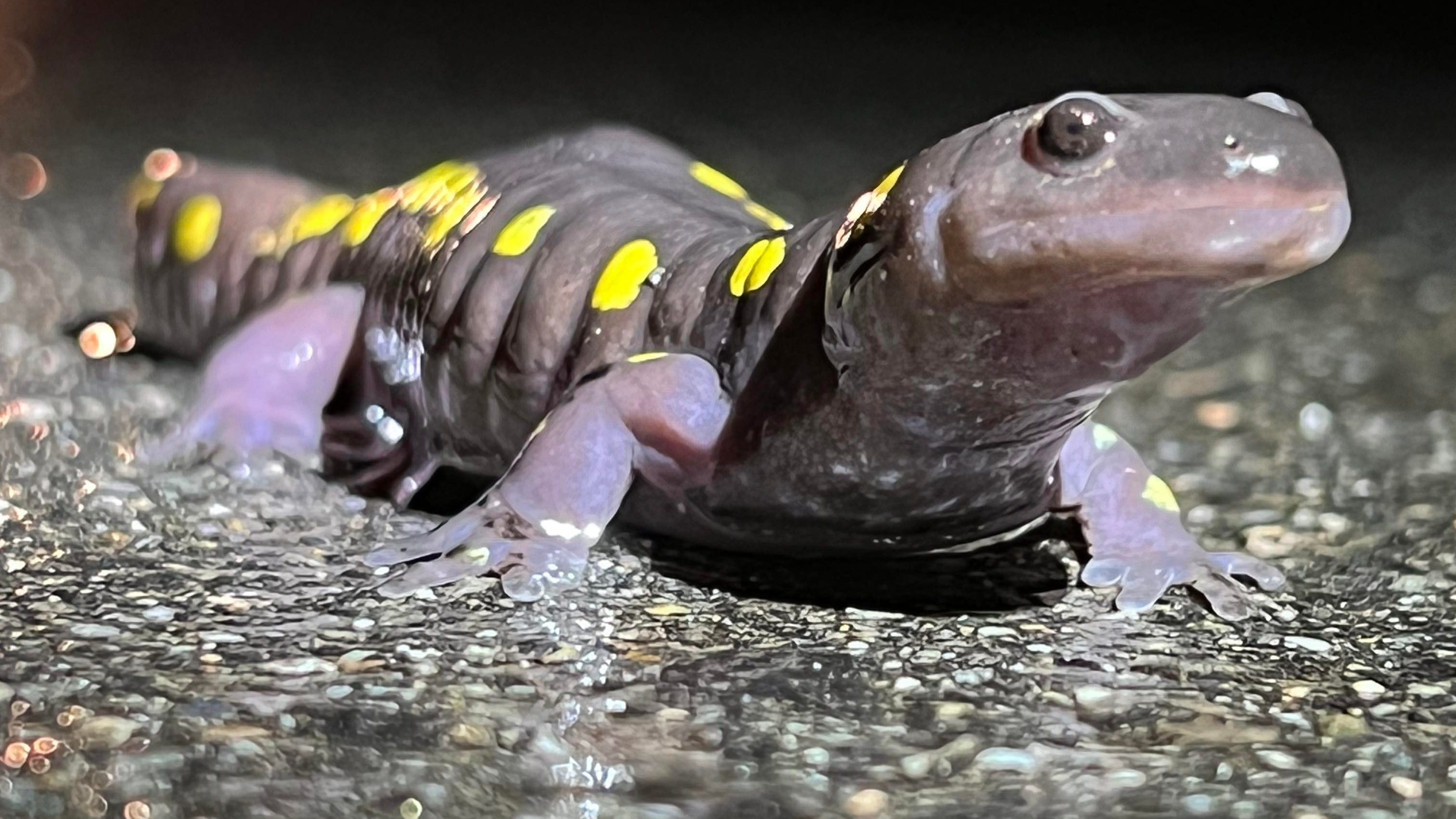
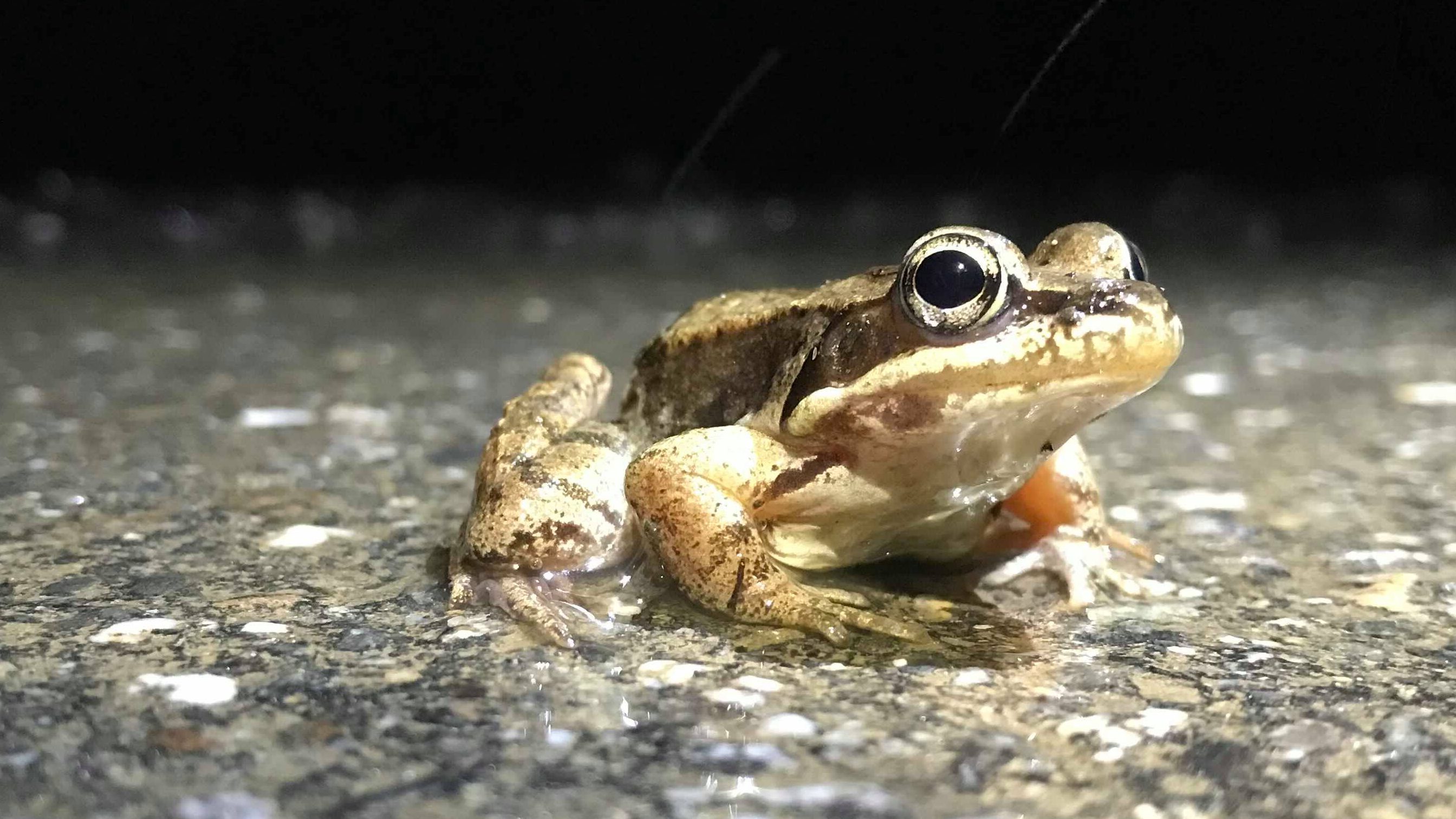
A “big night” is a remarkable and critical event in the life cycle of amphibians. It refers to the evening when certain amphibian species, driven by environmental cues like temperature and rainfall, embark on a mass migration from their winter habitats to breeding grounds. This spectacle often involves large numbers of amphibians, making it a captivating and significant occurrence in nature.
While the term “big night” implies only one night when this event may occur, it frequently occurs multiple times per year. In Maine, big nights tend to occur in early to mid April for most of the state. The triggers are mostly thawed ground, nighttime temperatures above forty degrees (the warmer, the better!), and enough precipitation to make the ground wet.
Why are big nights important?
Big nights aren’t just important for amphibians, either. Entire ecosystems depend on amphibians. During big nights, many predators may eat migrating frogs and salamanders, regenerating depleted energy stores after a long winter. Amphibians also represent the greatest total weight of living vertebrates in forest environments; this carries important implications for nutrient and energy cycling that would be lost without them!
Big nights are pivotal for amphibians as they mark the beginning of their breeding season. During this migration, frogs and salamanders travel considerable distances to reach breeding sites such as vernal pools or other wetlands. The success of their journey is vital for the continuation of their species, making these migrations a crucial aspect of their life cycle.
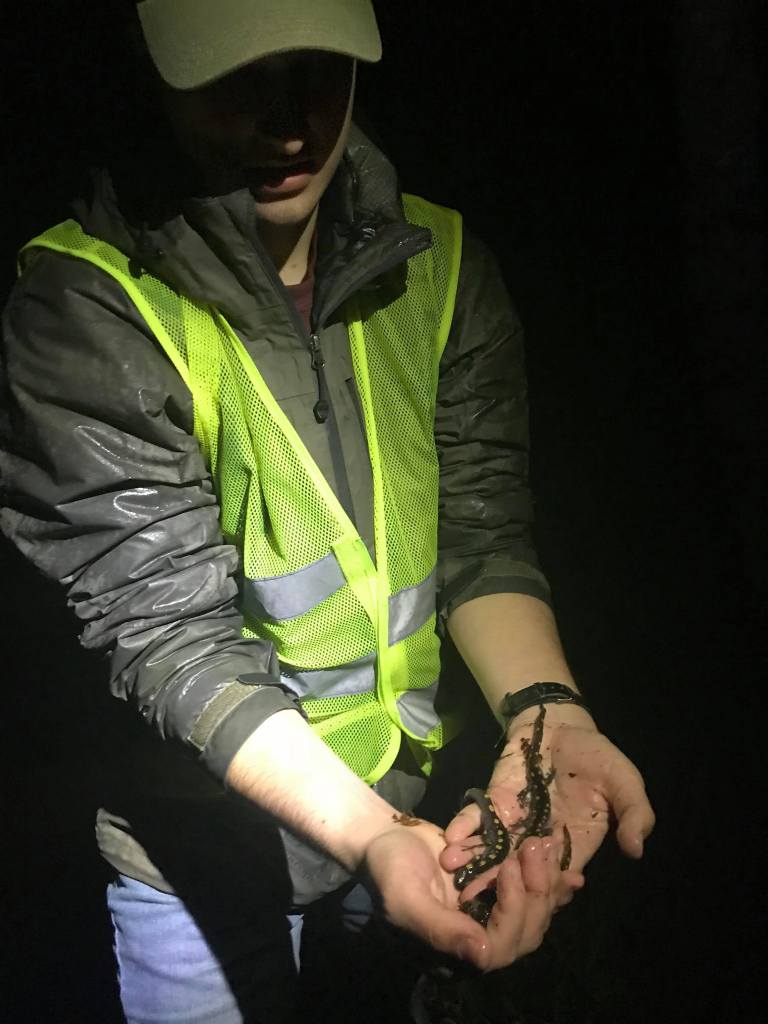
While Big Nights are a marvel of nature, they also pose significant challenges for amphibians, particularly when their migratory routes intersect with roads. Road crossings can be perilous for these small creatures, leading to high mortality rates due to vehicle collisions. Monitoring Big Nights, especially in the context of road crossings, becomes crucial for identifying migration patterns, assessing risks, and implementing measures to mitigate the impact of roads on amphibian populations.
Big nights are pivotal for amphibians as they mark the beginning of their breeding season. During this migration, frogs and salamanders travel considerable distances to reach breeding sites such as vernal pools or other wetlands. The success of their journey is vital for the continuation of their species, making these migrations a crucial aspect of their life cycle.
Why monitor big nights?
Monitoring big nights provides invaluable data for understanding amphibian populations, migration behaviors, and the impact of human infrastructure on their survival. By actively participating in monitoring efforts, we can identify high-risk areas, implement targeted conservation strategies, and work towards creating safer passage for these vital contributors to our ecosystems.
Join us in the mission to protect amphibians during their big nights, ensuring a harmonious coexistence between these incredible creatures and our shared environment!
 Maine Big Night: Amphibian Migration Monitoring