Board Member
The staggering global decline of amphibians and reptiles is one of conservation biology’s biggest
challenges. The unprecedented loss of habitat and its fragmentation, the illegal pet trade and the
devastating amphibian disease crisis are some of the major themes of my research. By
integrating field-based, population-level ecological studies with cutting-edge methodologies, my
research program is aimed at conserving our herpetofauna, wetlands and forested communities in
the eastern United States. A major focus of my research is aimed at understanding the ecology
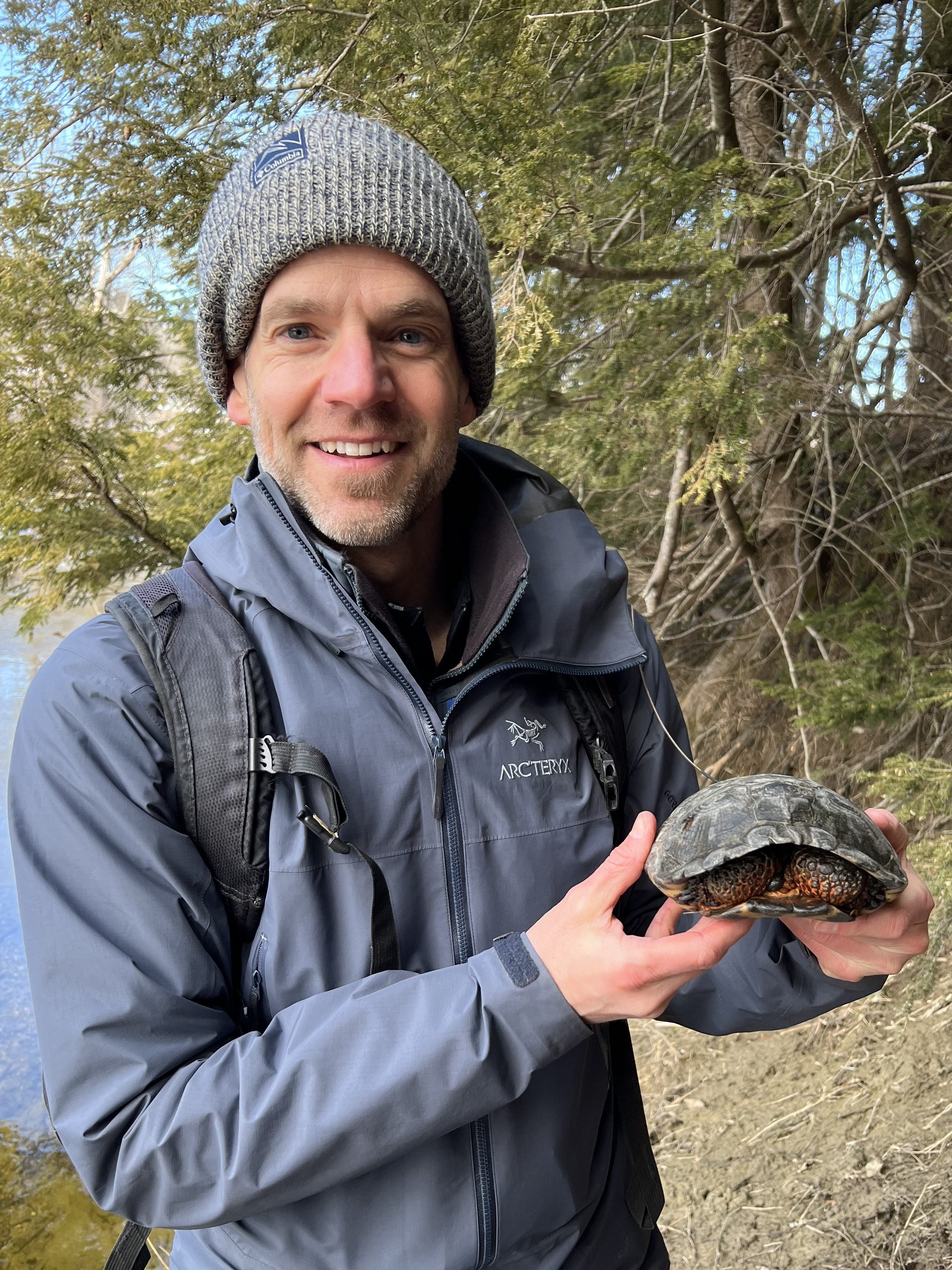
and evolution of the charismatic North American wood turtle, a species that is declining
throughout its range and is listed as a species of special concern in Maine. This work will
provide crucial details that will support conservation and management of this endangered species
by working alongside government, non-profit, and community stakeholders. Another major
theme in my eco-health research program is identifying drivers of amphibian declines, especially
the impact of emergent diseases and the effects these may have when combined with other
environmental stressors. Amphibians are the most endangered vertebrate class on earth, and
developing a holistic understanding of what is driving population declines is central to halting
the extinction crisis. Cumulatively, this highly collaborative work has revealed important
insights on these systems, which will impact the conservation of these and other threatened
groups. Matt received his BA in Biology from the University of Chicago and his PhD in Ecology
and Evolutionary Biology from the University of Michigan. He is currently an assistant professor
in the School of Biology and Ecology at the University of Maine.
 Maine Big Night: Amphibian Migration Monitoring